Sacred Tradition: What the Church Means — and What It Doesn't
Part-1 of a Series on Tradition, Deposit of Faith, and How it all Applies to the Catholic Liturgy
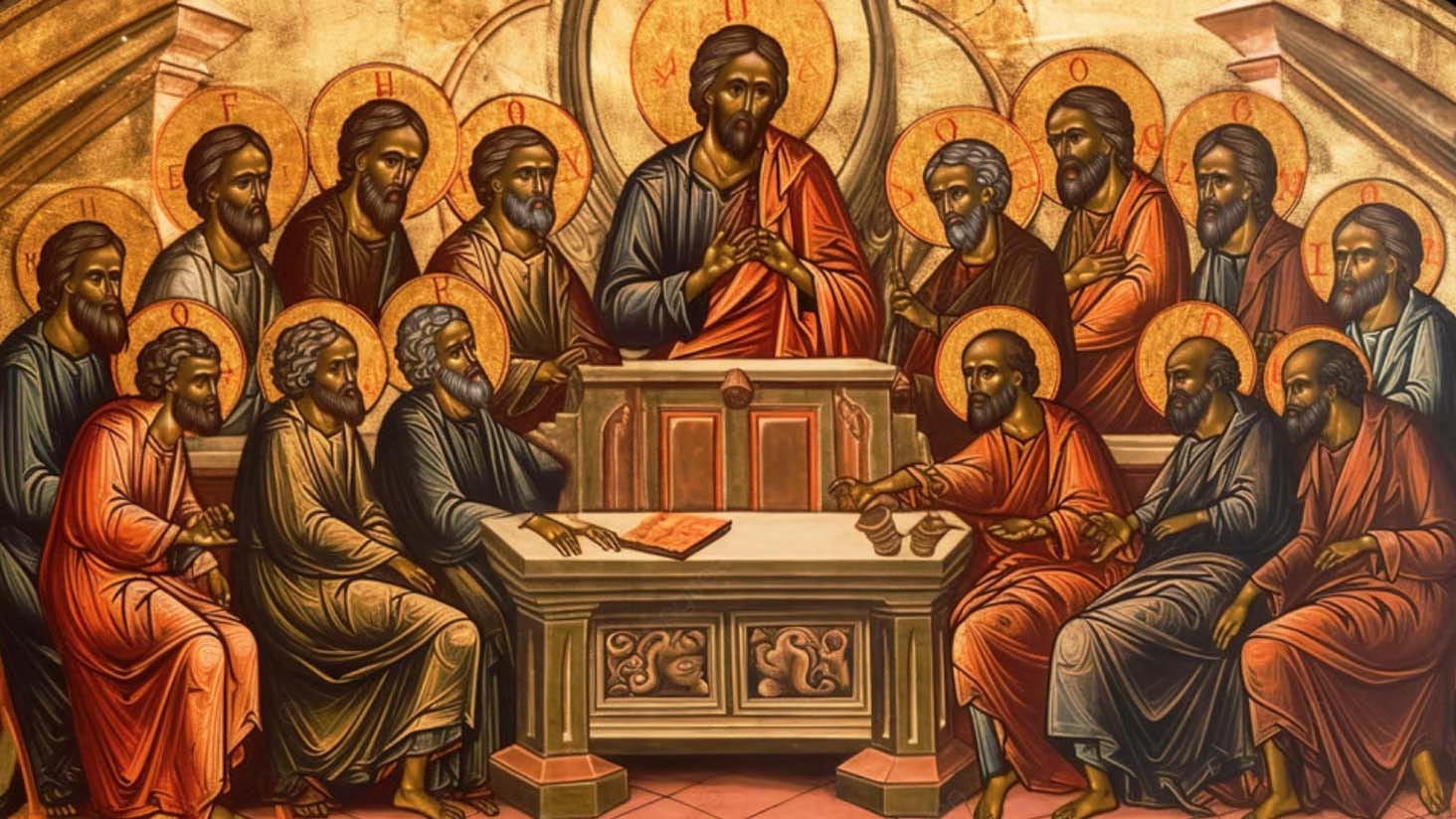
Not many words get tossed around so liberally in Catholic discourse than “Sacred Tradition (sometimes just “Tradition”). And few are understood with less precision.
For many Catholics, “Tradition” has quietly come to mean whatever feels ancient, reverent, or familiar. Older prayers. Older customs. Older ways of doing things. When those things are questioned or changed, the response is often immediate: “This violates Tradition.”
But that reaction is a problem. Not a problem of reverence, and not with love for the Church’s past—but with definition and application. Because in Catholic theology, Sacred Tradition does not mean “whatever the Church used to do, for a long time” It means something far more specific, and far more limited.
If we don’t get that right, we’ll end up defending the wrong things, or even defending the right things wrongly, weakening the very Tradition we’re trying to protect.
Follow me X | Insta | TikTok | YouTube | Facebook | Discord
What Sacred Tradition Actually Is
Sacred Tradition refers to the handing on of divine revelation entrusted by Christ to the Apostles and preserved in the Church under the guidance of the Holy Spirit. It concerns what God has revealed for our salvation, not every historical expression that developed around that revelation (i.e. the Roman Rite is Sacred Tradition. The form of the Mass is not).
“Sacred Tradition is apostolic in origin. It’s what the Apostles received and handed on. “
Together with Sacred Scripture, Sacred Tradition belongs to what the Church calls the Deposit of Faith. That deposit contains the fullness of revelation given once for all in Christ. The Church does not add to it. She does not subtract from it. Her task is to guard it, teach it, and hand it on faithfully.
That alone tells us something important. Sacred Tradition is about content, not aesthetics. About Truth, not taste.
Sacred Tradition is apostolic in origin. It’s what the Apostles received and handed on. It concerns revealed realities: Who God is, what He has done, how He saves. And while the Church’s understanding of these truths can deepen over time, the truths themselves do not change. Sacred Tradition tells us what must be believed.
It does not automatically determine exactly every way the Church expresses that belief across history.
Where Confusion Creeps In
Problems begin when Sacred Tradition is treated as a catch-all category for everything inherited from the past, or something that’s particularly old, from a distant past.
Over time, Catholics understandably grow attached to particular prayers, customs, devotions, and liturgical forms. Some of these are ancient. Some are beautiful. Some have nourished the faith of generations. But age alone does not place something within Sacred Tradition.
“Bells during the consecration? I love that, too, but leaving them out is not a break from Sacred Tradition”
The Church has always distinguished between the substance of the faith and the ways that substance is expressed, protected, or celebrated. I try to make this clear to people in comments on social media and I’m surprised by so many people rejecting this basic point. It’s largely why I’m writing this article. When the distinction between substance and expression (or form) collapses or is completely overlooked, Sacred Tradition gets stretched far beyond its proper meaning, and practically everything potentially becomes interpreted as a rupture from the Church’s Tradition. Bells during the consecration? I love that, too, but leaving them out is not a break from Sacred Tradition. Mass in the vernacular? Do I have to break the news to you, or have you figured it out?
Tradition and Change Are Not Enemies
There is a widespread and often unspoken assumption today that change itself is a sign of rupture. If something changes, it must have broken from Tradition. If it is traditional, it must be unchanged. That assumption is not Catholic. I’ll go further: That assumption is not “Traditional Catholicism“. So we have to be careful and precise about those assessments and judgements before expressing them.
From the beginning, the Church has understood that revealed truth is unchangeable, while disciplines, structures, and rites are not—those can be changed or modified. The faith remains the same; the Church’s way of teaching, governing, and celebrating that faith develops over time.
This is why the Church has always exercised authority over things like sacramental rites and liturgical norms, ecclesiastical disciplines, the regulation or suppression of particular practices. None of this threatens Sacred Tradition, because Sacred Tradition does not consist of external form. It consists of revealed truth safeguarded across time.
The Church is not betraying Tradition when she governs her life. She is acting as its steward.
Why Precision Matters
When everything inherited from the past is labeled “Sacred Tradition,” two distortions follow.
First, real Tradition is diluted. If everything counts as Tradition, then the term loses its meaning — and with it, its authority.
Second, the Church’s teaching authority is quietly undermined. Because if every received practice is treated as untouchable, the Church is reduced to preserving artifacts rather than teaching, governing, and sanctifying. Ironically, this mindset does not protect the faith. It freezes it. It turns Tradition into a museum exhibit rather than a living transmission.
Sacred Tradition was never meant to lock the Church in a particular century, in a box, or—as it turns out—in a casket. The Church is alive, not dead. It lives through times, not in a period. It was meant to ensure that what Christ revealed would never be lost, even as the Church moved through history, cultures, and crises.
Why This Matters for the Liturgy
This is why debates about the liturgy become so heated. When the form of a rite is mistaken for the substance of the faith, any change feels like betrayal.
But once Sacred Tradition is properly understood, a necessary distinction becomes clear. The substance of the sacraments belongs to the Deposit of Faith. The expressions belong to the Church’s authority.
That distinction is not an excuse for carelessness. It is the very framework that makes continuity possible. It allows the Church to remain faithful without becoming brittle — and alive without becoming unmoored.
Where we Go Next
This article is meant to clear the ground.
In the next piece, we’ll look more closely at the Deposit of Faith itself — what belongs to it, what does not, and how the Church has always known the difference. From there, we’ll be in a position to speak honestly about the history of the Roman liturgy and the claims often made about it today.
Because clarity is not the enemy of Tradition. Confusion is.
Follow me on socials X | Insta | TikTok | YouTube | Facebook | Discord


