

When blind men see – Changing your approach to faith
How the blind teach us how to "see" in our faith experience (Contributed by Ellis, the Critic)
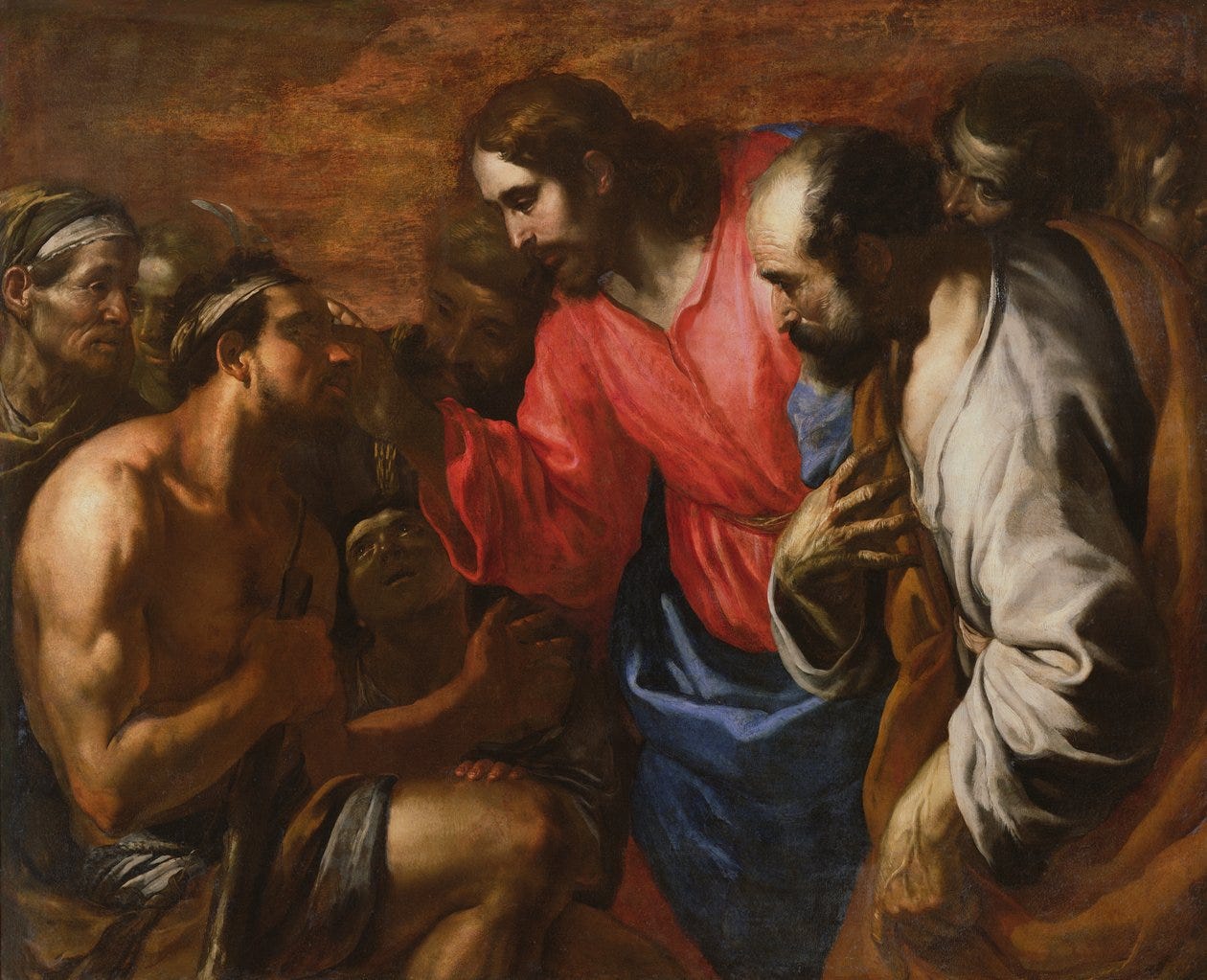
This piece is a contribution from a very talented young Catholic named Ellis ( Ellis, The Critic.) who has been a friend and supporter of my work. He’s also studying broadcast and communications, so he’s a “broadcaster-in-the-making” himself. I hope to collaborate with him in the future.
This piece is deep, thoughtful and a heartfelt reflection on a Gospel reading we all know, but maybe haven’t thought so deeply about. If you enjoy it, please let him know in a comment. We have to stick together.
During Lent, Catholics all across the world reflected on the story of the man born blind, and his miraculous encounter with Christ. This seemingly ordinary gospel the middle of Lent must have struck a chord with me, as even now, weeks later, I still find myself returning to it.
One part in particular has stood out to me, towards the end of the reading.
It wasn’t any of the passages detailing Christ’s miraculous healing, or even the man’s subsequent questioning at the hands of the Pharisees, seeking to entrap him.
Rather, it was the quiet, private meeting between Christ and the once-blind man at the very end of the story.
It goes as follows:
Jesus heard that they had driven him out, and when he found him, he said, “Do you believe in the Son of Man?” He answered, “And who is he, sir? Tell me, so that I may believe in him.” Jesus said to him, “You have seen him, and the one speaking with you is he.” 38 He said, “Lord, I believe.” And he worshipped him.”
[John 9:35-39 – NSRV-CE:]
When I heard those words at Mass, I knew that this blind man had something to teach me about faith.
God meets us where we are
You might have heard the saying that “God meets us where we are” – and I think that’s true, but in this reading not only do we see Christ seeking the once-blind man, as in: “Jesus heard that they had driven him out, and when he found him...” - but we also see that God isn’t afraid to challenge us.
Saint Augustine teaches us how the challenges that God gives us can often be exactly the thing that transforms us into the people we need to become.
This echoes throughout Scripture too, as in Isaiah 48:10:
“See, I have refined you, but not like silver; I have tested you in the furnace of adversity.”
But this reading shows us that, just as God can challenge us to refine our faith, he also invites us to challenge our own assumptions about faith. Because when a man who has been blind all of his life, and who has been given the gift of sight, is approached by a miracle-worker, and asked if he believes, what does he say?
He asks a question.
God is not fragile
When I’ve spoken with my non-religious friends about faith, Catholic or otherwise, some of them have remarked that they “could never believe in something religious”, as if faith demands suspending all curiosity.
So ask yourself, when an Atheist peers into the windows of your parish community, what would they see?
Maybe they’ll see all of the observances, traditions and rituals that make up the day-to-day. Maybe they’ll think of their Catholic friends saying grace before they eat, not being free on Sunday mornings, or making a sign of the cross when they walk past a graveyard.
But what they won’t see are the quiet struggles of faith. The times when all you can do is ask “Why, God, Why?” And that is something which a man born blind knows as if by instinct - something it has seemingly taken me a lifetime to learn.
You won’t “break” God by asking a question, because that’s what people who are interested in something do. If you want to know more about something, you’ll ask questions! Don’t worry, God is not fragile. God can take a few questions.
On that day the once-blind man had already experienced the revelation of sight for the very first time, and now he asks the one who bestowed it unto him to provide another revelation, one of faith.
When the man asks:
“And who is he, sir?”
He does so, immediately saying:
“Tell me, so that I may believe in him.”
He who struggles with God
This teaching isn’t just contained to the new testament. Even in the old testament, with all of its ceremonial laws, we can find that God bestows the name of “Israel” onto his people, meaning “He who struggles with God”.
Going back to the reading, compare this man’s faith to that of the Pharisees presented in the same reading.
Both ask questions, but the reading shows us that only one is interested in the truth.
The gospel writers make it clear that the Pharisees have already made up their mind, their intent is evident. But so is the once-blind man’s intent, the reading goes as far as to state it right after his question, when he says “Tell me, so that I may believe in him.”
He is asking because he has a genuine desire to know more.
And THAT is faith.
Not some blind adherence to a code of ancient laws, but a genuine desire to know more about Christ.
By embracing an honestly questioned faith, rather than fearing it, we too can follow in the footsteps of the once-blind man. Because with a strong, tested faith, we too are transformed. Where once we were blind, now we will see.
God Bless,
Ellis, The Critic.
👆Show Ellis your appreciation